Modified Shi Quan Da Bu Tang For Perimenopause
Shi Quan Da Bu Tang: A Classical TCM Formula Adapted for Perimenopausal Women
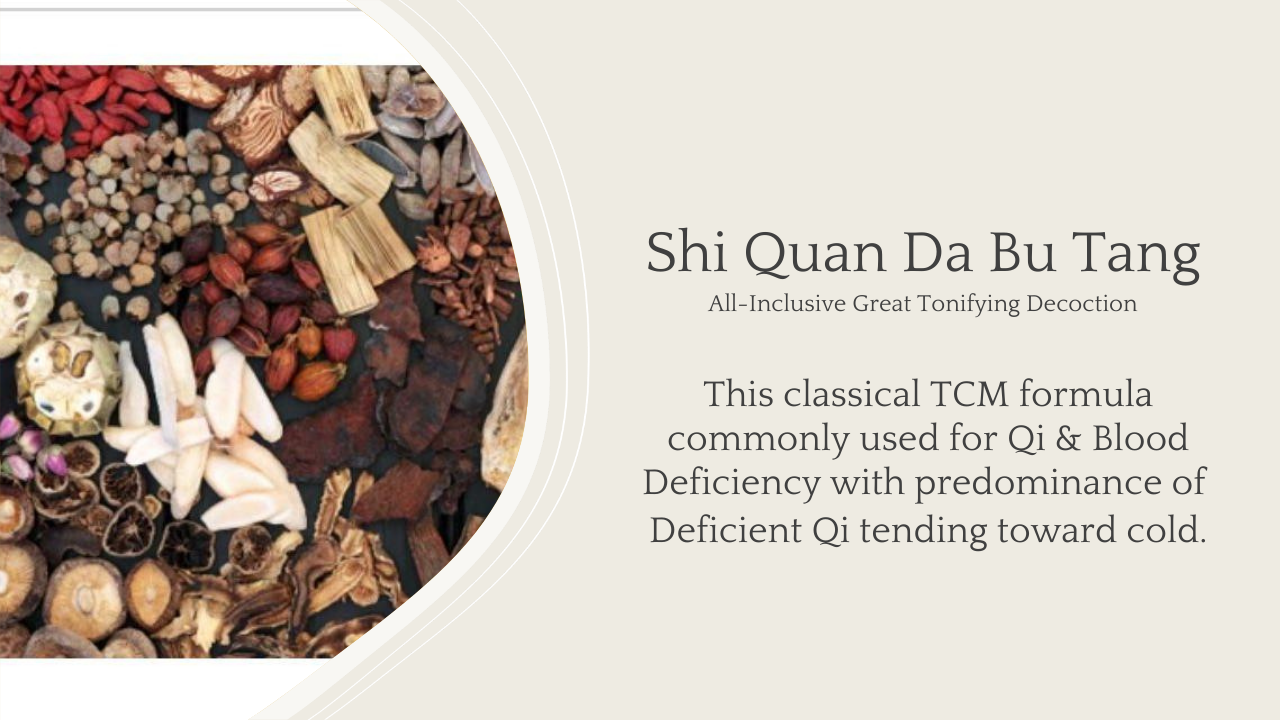
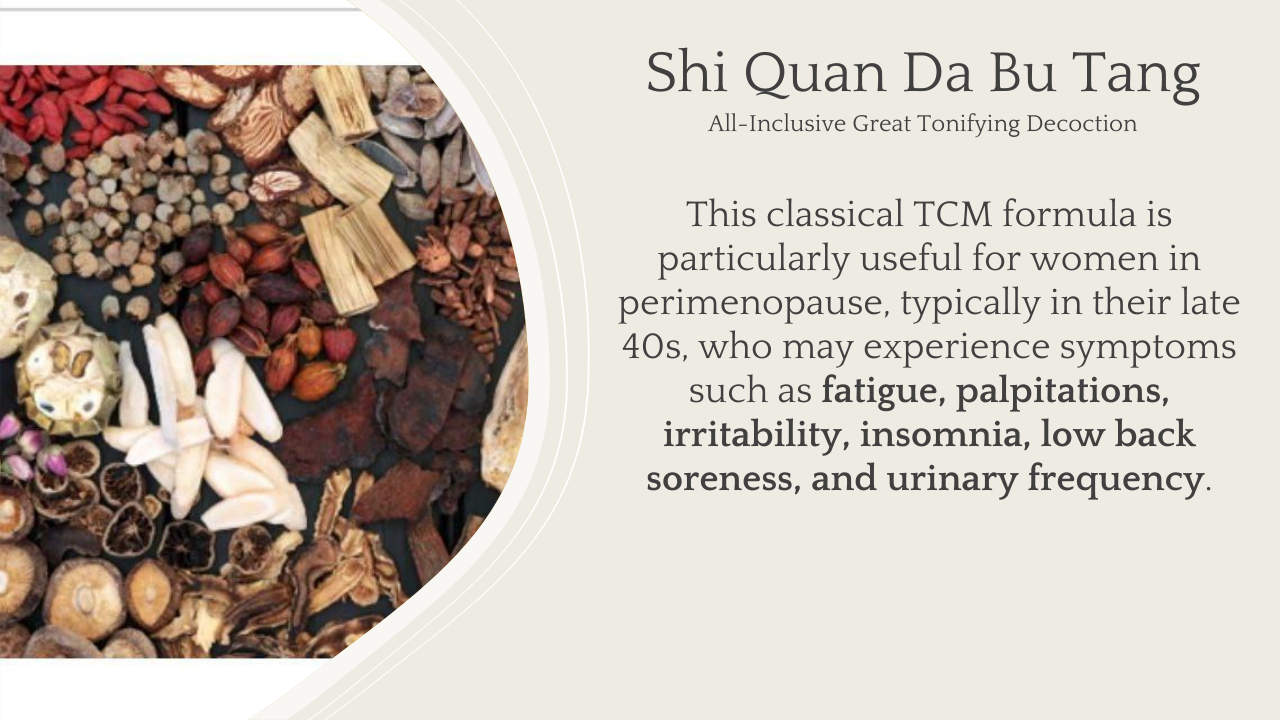
Shi Quan Da Bu Tang (All-Inclusive Great Tonifying Decoction) is a classical TCM formula historically used for Qi and Blood deficiency, particularly when deficient Qi tends toward cold. In contemporary practice, this formula is adapted for perimenopausal women in their late 40s, helping to alleviate symptoms such as fatigue, palpitations, irritability, insomnia, low back soreness, and urinary frequency.
INTRODUCTION
More and more women are embracing the sovereignty of their own health, especially as it relates to biological female health patterns. Traditional Chinese Medicine (TCM) identifies patterns related to each individual. This clearly helps identify the individual's imbalance rather than labeling them with a broad diagnosis that many appear to have, yet its individual nature can't be treated with blanket one-size-fits-all treatments. That’s why, if someone, for example, is labeled as perimenopausal, one prescription won’t help their body to achieve the homeostasis they require to feel at their best health. Yes, it could help someone, but usually it’s a prescription that is treating a textbook definition rather than a dynamic presentation. Ask a group of women who have been told by their physician that they are experiencing the symptoms related to perimenopause, or even identified through their blood work, and each woman could be experiencing patterns that are vastly different. One could be experiencing hot flashes, while another may not have any hot flashes; another could be experiencing anemia, while another does not have anemic presentations; one could have trouble sleeping, while another sleeps well and deeply. The examples could go on and on.
Perimenopause is simply a transition period. It’s the season of life before menopause, which is the season of life where fertility ceases, and menstrual cycles completely stop. This season of life can often be described in a negative light, just as puberty is often mislabeled. However, I want to offer a different perspective, one that aligns with the notion of a Second Spring in Traditional Chinese Medicine (TCM). During this season of life, the Kidney Jing (精) begins to decline, and we release the surplus of Qi needed to create and give to new life.
Kidney Jing (精) is one of the Three Treasures (Jing, Qi, Shen) in TCM, representing the most concentrated form of energy. Kidney Jing (精) in Traditional Chinese Medicine (TCM) is the core of our life essence, inherited from parents and stored in the Kidneys, governing growth, development, reproduction, and longevity, acting as the foundation for Yin/Yang and vitality, constitutional strength, bones, marrow, and genetic traits (like DNA), represents our Willpower (Zhi) and memory. This is often depleted by stress, aging, and illness, but is replenishable through our PostNatal Jing, which we acquire through lifestyle habits that include practices like Qigong, acupuncture, a healthy diet, sufficient sleep, and stress management aimed to conserve and replenish lost Jing. This can even be seen from a biomedical perspective, as postmenopausal, the ovaries secrete androgens but virtually no estrogen.6,7 Although the ovary may still contain some oocytes, the follicles are largely incapable of responding to gonadotropins and of synthesizing estradiol. Removal of postmenopausal ovaries often fails to change the levels of total circulating estrogen.7 The estrogen produced after the menopause is primarily from the peripheral conversion of adrenal androgens and occurs in the liver, kidney, brain, adrenal, and peripheral adipose tissue.8 Only small quantities of estrone and estradiol are secreted by the ovary.6,7,9,10
Menopause is the season in a woman's life where her ovaries stop producing eggs and significantly decrease estrogen, leading to the end of menstrual periods. For a woman of balanced health, the most salient symptoms she may experience are vaginal dryness and possible hot flashes, but for many women, this is not the case. More and more women are speaking of their experiences in perimenopause and menopause as traumatic and consider it to be a major breakdown rather than a simple transition. The transition is so severe because they have experienced life in a constant state of depletion. Experiencing and living in a modern world has demanded that women deplete themselves, but the wisdom of how to replenish and nourish the root has been mostly forgotten. This is not just about extra sleep and spa days; this is about nourishing the marrow, the blood, the bones of a woman.
Perimenopause and Menopause can be an opportunity to change and to support ourselves in the most deeply nourishing and healing ways.
Kidney Jing (精) is made up of Kidney Yin and Kidney Yang. During menopause, most women experience more Kidney Yin Deficiency with Heat patterns. This could be experienced as hot flashes, malar flushing, night sweats, hot flashes/flushed cheeks, late afternoon low-grade fever, dry throat, dizziness, tinnitus, low back pain, irritability, insomnia, palpitations, forgetfulness, dark urine, constipation, a red tongue with little or no coating, and cracks on the tongue. While others may present more with Kidney Yang Deficiency patterns, where they could experience cold, low energy, and urinary issues, lower back/knee pain, intolerance to cold (specifically at the waist), lethargy, frequent pale urine, low libido, a pale, possibly swollen tongue with a weak pulse. Not to mention there could be a combination of patterns involving other organs as they relate to Organ Patterns in TCM, such as Spleen Qi Deficiency, Liver Qi Stagnation, Heart-Kidney Disharmony, and the list goes on. As can be seen, one size does not fit all. Each person must be nourished in the way that is specific to their health patterns. Lifestyle choices and habits matter the most.
Classical Formula
The formula I am presenting is a modified version of Shi Quan Da Bu Tang (All-Inclusive Great Tonifying Decoction). This classical Traditional Chinese Medicine (TCM) formula is traditionally used to Tonify Qi and Blood, particularly in cases of chronic deficiency with cold tendencies. This application for perimenopausal women highlights both the classical composition and contemporary modifications tailored to Yin deficiency with Empty Heat or Yang deficiency presentations. The formula’s combination of herbs addresses physical symptoms such as fatigue, palpitations, and low back soreness, as well as emotional challenges such as irritability and insomnia. By harmonizing Qi, Blood, and Yin-Yang balance, Shi Quan Da Bu Tang gently supports women through the transitional phase of perimenopause, nurturing the body and restoring resilience and vitality.
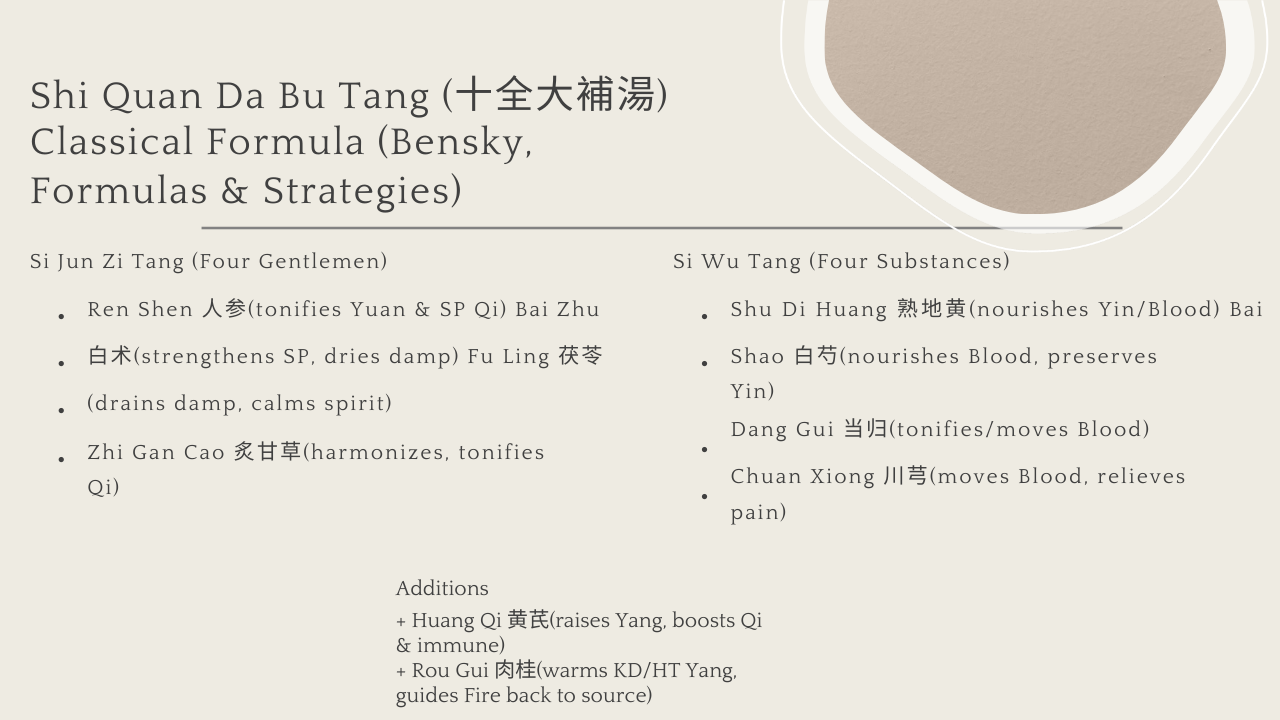
Shi Quan Da Bu Tang is a combination of formulas Si Jun Zi Tang (Four Gentlemen Decoction) and Si Wu Tang (Four Substances Decoction) but with the additions of Huang Qi 黄芪 (Astragalus membranaceus/astragalus root/milk-vetch root) which raises Yang, boosts Qi and immune function, and then also the addtion of Rou Gui 肉桂 (Cinnamomum cassia/cinnamon bark/inner bark of Saigon cinnamon) which warms Kidney/Heart Yang and guides fire back to source.
MODIFICATIONS
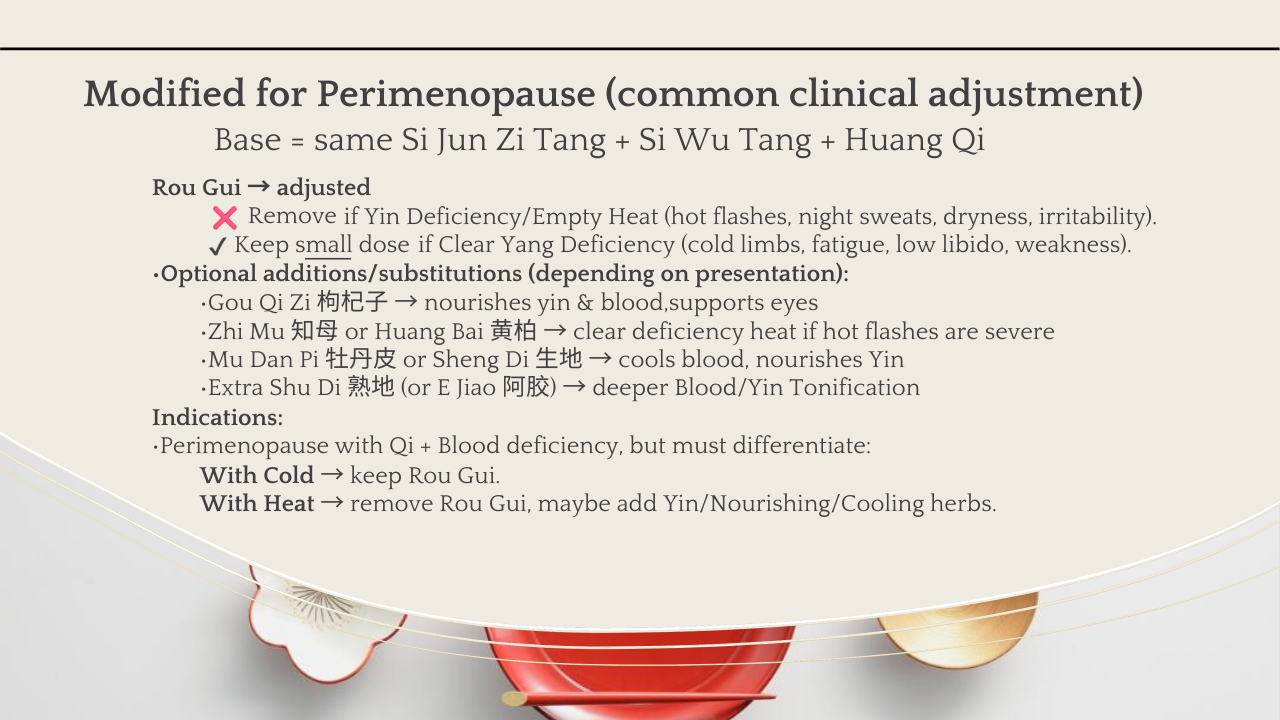
While the classic formula, Shi Quan Da Bu Tang , is particularly useful for women experiencing Qi and Blood deficiency during perimenopause. Modified versions can be even more helpful.
Base formula: Si Jun Zi Tang + Si Wu Tang + Huang Qi
Rou Gui:
REMOVE if Yin Deficiency / Empty Heat (hot flashes, night sweats, dryness, irritability)
KEEP small dose if Yang Deficiency (cold limbs, fatigue, low libido, weakness)
Optional Additions:
Gou Qi Zi 枸杞子 (Lycium barbarum L./lycium fruit/Chinese wolfberry/matrimony vine fruit), which nourishes Yin and Blood and supports the eyes.
Zhi Mu 知母 (Anemarrhena aspheloides/anemarrhena rhizome) or Huang Bai 黄柏 (Phellodendron chinense/phellodendron bark/Amur cork-tree bark), which clears deficiency heat.
Mu Dan Pi 牡丹皮 (Paeonia suffruiticosa/moutan root bark/tree peony root bark or Sheng Di 生地 (Rehmannia glutinosa/rehmannia root/Chinese foxglove root/unprepared), which cools blood and nourishes Yin.
Extra Shu Di 熟地 (Rehmannia glutinosa root/cooked rehmannia root/prepared Chinese foxglove root) (or E Jiao 阿胶), which is a deeper Blood/Yin tonification.
FORMS OF FORMULA
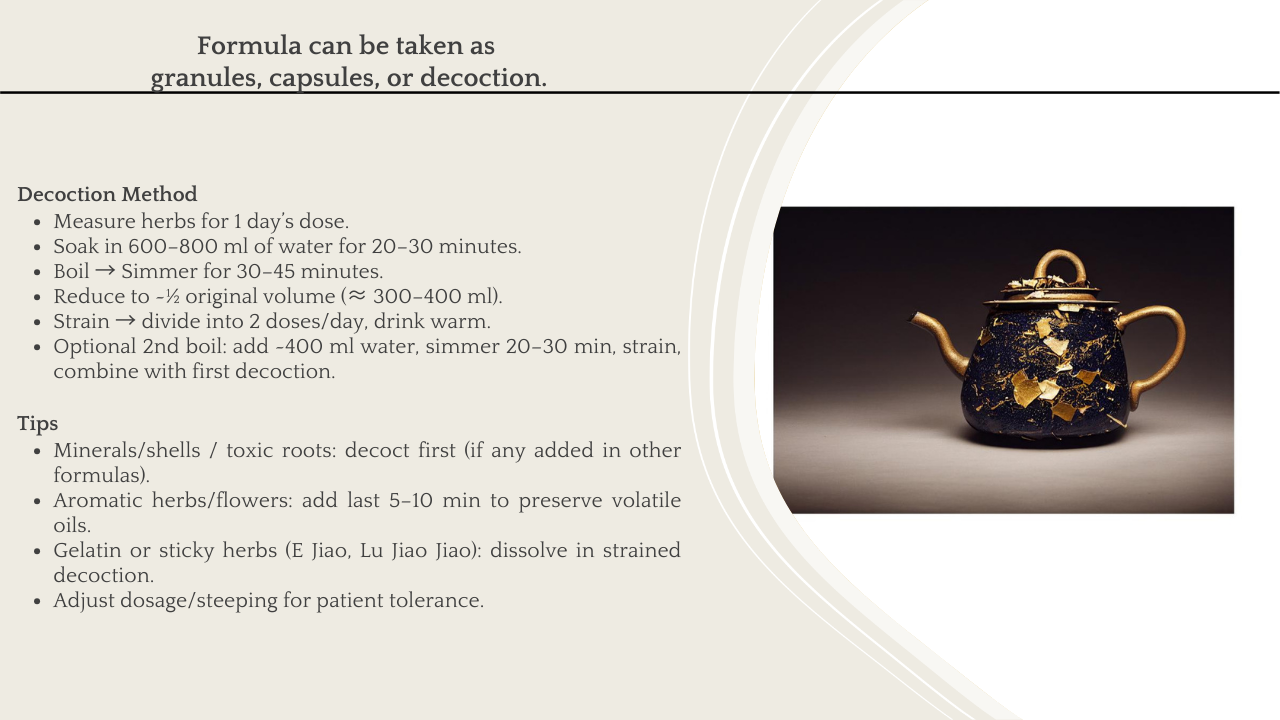
As with any formula, there are many ways of ingesting this formula. The Tang, or decoction, is the classic form and most bioavailable way to ingest. However, it can be administered in the form of granules or capsules as well. Formulas such as these are given by board-certified Traditional Chinese Medicine Herbalists. When this modified formula is selected, the formula can be prepared in the herbalist’s office if they have their own pharmacy, or ordered through a separate Chinese Herbal Pharmacy that can be delivered to you.
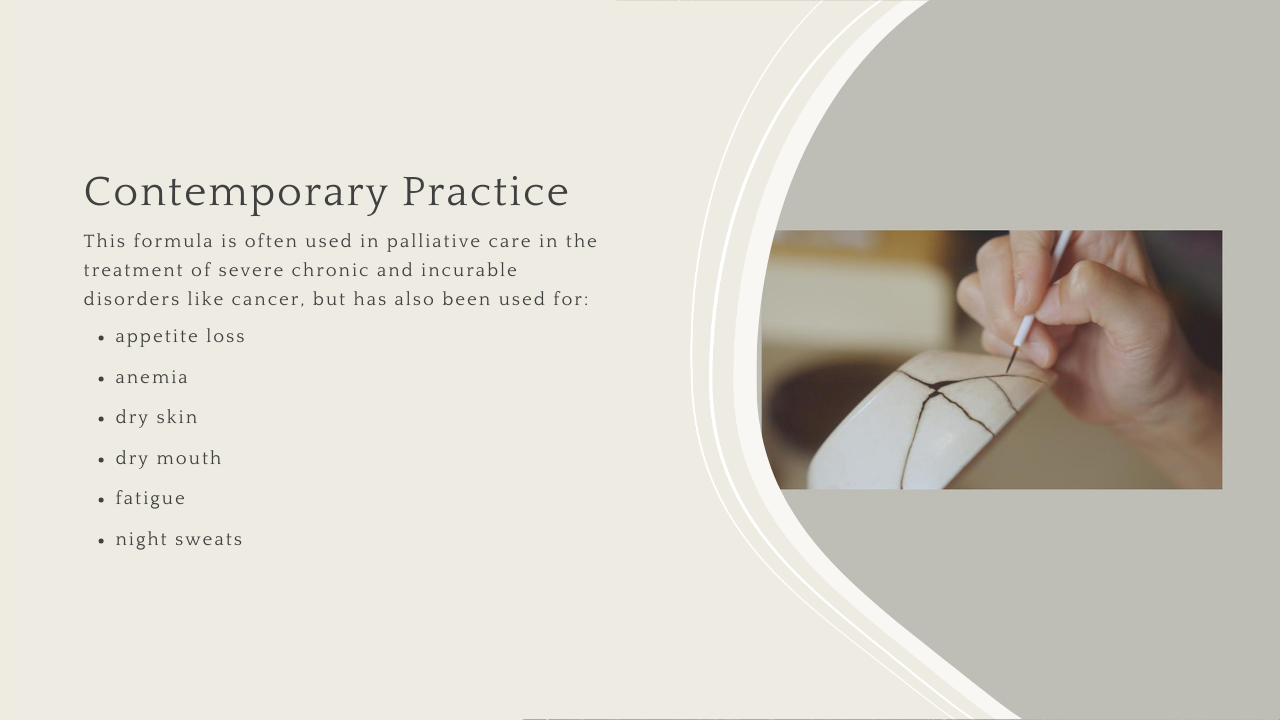
CONTEMPORARY PRACTICE
Shi Quan Da Bu Tang is often used in palliative care for severe chronic or incurable disorders, such as cancer. It has also been employed for appetite loss, anemia, dry skin or mouth, fatigue, and night sweats. Memorial Sloan Kettering has reported that “Shi Quan Da Bu Tang is an herbal formula that consists of 10 herbs: Panax ginseng (Ginseng), Angelica sinensis (Dong quai), Paeonia lactiflora (Peony), Atractylodes macrocephala (Atractylodes), Poria cocos (Hoelen), Cinnamomum cassia (Cinnamon), Astragalus membranaceus (Astragalus), Liqusticum wallichii (Cnidium), Glycyrrhiza uralensis (Licorice), and Rehmannia glutinosa (Rehmannia) (1). Also known as Juzen-taiho-to in Japan, it is used in traditional medicine to alleviate fatigue, anemia, appetite loss, dry or scaly skin, night sweats, and dry mouth, and to treat cancer. Supporters believe the formula’s beneficial effects are due to interactions between its components.
Preclinical studies suggest that Shi Quan Da Bu Tang may protect against Alzheimer’s disease (13) and may prevent muscle atrophy by lowering oxidative stress (19). It also exhibits antitumor and antimetastatic properties (2) (3) (4) (5) (6) (12), as well as radio- (7) and myeloprotective effects (17).
Preliminary clinical data indicate it helps improve anemia (14) (15) (16) and is effective in preventing recurrent acute otitis media in children (20). Data on whether it can improve symptoms in adults with chronic fatigue are mixed (26).
In oncology settings, the formula has been reported to exert immunomodulatory effects in pancreatic cancer patients (21), increase survival time in patients with lung cancer (8) (27), and alleviate hematotoxicity in patients with breast cancer receiving chemotherapy (18). Additional trials are underway to determine effectiveness against cancer-related fatigue (22) and anorexia (23) as well as cold hypersensitivity in hands and feet (24). Preliminary results from one trial suggest improvements in cancer-related fatigue and quality of life (28).
Breast cancer patients should consult their physicians before using this formula because dong quai and ginseng may stimulate the growth of breast cancer cells (11).”
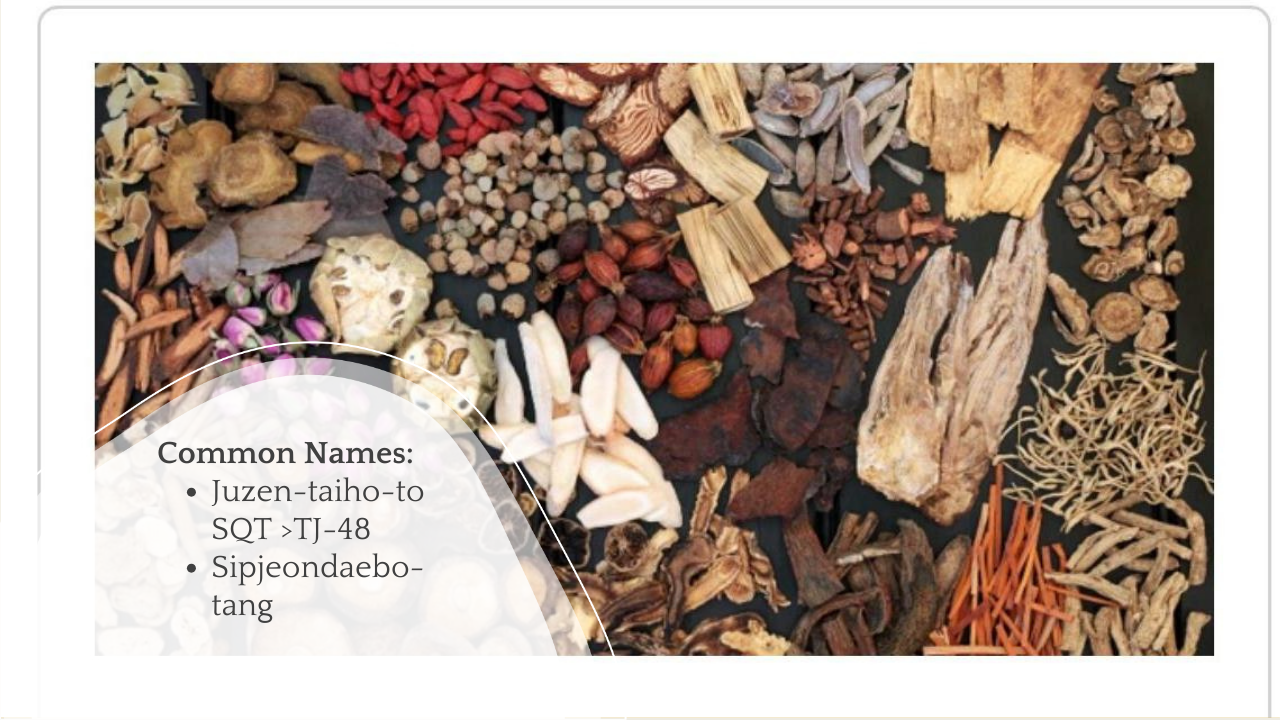
Common Names: Juzen-taiho-to, SQT, TJ-48, Sipjeondaebo-tang
CAUTIONS & CONTRAINDICATIONS
While Shi Quan Da Bu Tang is generally a safe formula, there are cautions and contraindications that must be addressed. Breast cancer patients should consult their physician because the herbs Dang Gui and Ren Shen may stimulate breast cancer cell growth. Also, Shi Quan Da Bu Tang is a strong tonifying formula and must be avoided if there are excess patterns (e.g., thick tongue coating, forceful pulse).
MORE POINTS OF CAUTION
Herb-drug interactions are possible with oral chemotherapy agents such as S-1; monitoring of bone marrow, liver metabolism, and gastrointestinal tolerance is advised.
S-1 is the brand name for an oral anticancer drug that is used mainly in gastric cancer, but also in colorectal, pancreatic, head and neck, non–small cell lung cancer, and other solid tumors. Commonly used in Asia and parts of Europe. In Japan, it is a standard chemotherapy option, sometimes given alone or combined with other drugs like cisplatin or oxaliplatin.
BONE MARROW STIMULATION VS SUPPRESSION
S-1 can cause myelosuppression (low WBC, platelets). Also, some herbs in Shi Quan Da Bu Tang are thought to tonify blood, potentially affecting bone marrow activity indirectly. While not a direct pharmacologic conflict, careful monitoring is advised if the patient is on chemotherapy.
HERBS AFFECTING LIVER METABOLISM
Some components, like Gan Cao and Ren Shen), can influence CYP enzymes (Cytochrome P450 are a large family of enzymes, primarily in the liver, crucial for metabolizing drugs, toxins, and endogenous compounds like hormones, by making them more water-soluble for excretion, with specific CYP3A4 and CYP2D6 types handling most drug metabolism, but their varying activities can cause significant drug-drug interactions.) S-1 metabolism could theoretically be affected, altering 5-FU plasma levels, increasing toxicity risk (e.g., diarrhea, mucositis, hand-foot syndrome).
GASTROINTESTINAL IRRITATION
Both S-1 and Shi Quan Da Bu Tang may affect digestion. Combining them could increase nausea, diarrhea, or abdominal discomfort.
TIMING MATTERS
Many clinicians recommend spacing oral TCM formulas and oral chemotherapy by several hours to reduce absorption interactions.
Shi Quan Da Bu Tang is just one of many classic, time-tested formulas supporting perimenopausal women. This formula in particular addresses patterns by balancing Yin, Blood, and Qi. Its combination of herbs addresses both physical and emotional symptoms of this transitional phase, restoring harmony and resilience as women move through the cycles of change. I highly encourage the education of everyone and taking sovereignty in their own health, and also working closely with a licensed TCM Herbalist. As always, I share this information for educational and informational purposes only. It is not intended to diagnose, treat, cure, or prevent any disease, nor is it a substitute for licensed medical or psychological care. I am not acting as a medical provider. Always consult a qualified healthcare practitioner before beginning any new wellness or herbal practice, especially if you are pregnant, nursing, taking medications, or managing a medical condition.
The information shared on this website and in associated offerings is provided for educational and informational purposes only. It is not intended to diagnose, treat, cure, or prevent any disease, nor is it a substitute for licensed medical or psychological care.
I am not acting as a medical provider. Always consult a qualified healthcare practitioner before beginning any new wellness or herbal practice, especially if you are pregnant, nursing, taking medications, or managing a medical condition.